
Zombie Kitty Rowr Blog
Real, Raw-r, & Unruly
Why K-Pop Demon Hunters Made My Cry (And Why That Matters)
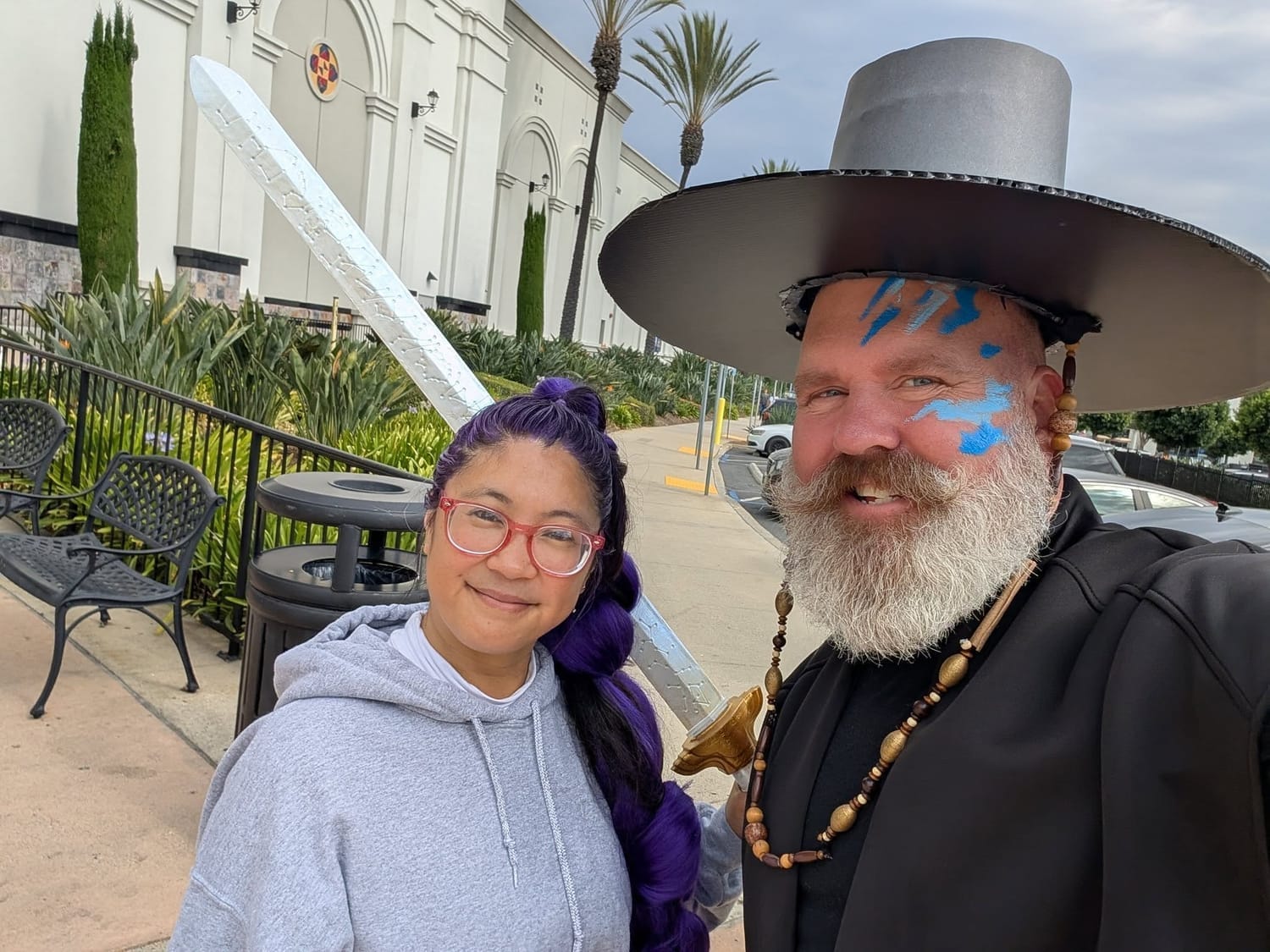
When Paul put on Kpop Demon Hunters, I gave him the look. You know the one—the "oh, are we really watching this?" look. He shrugged and said, "Well, we can see if it's any good."
I wasn't convinced. But then the opening hit—"Get It Done"—and we both just stared at each other like, "Well, DAMN, okay then." I settled into the couch because I knew I was in for the whole ride.
And what a ride it was.
It's More Than Just a Baller Soundtrack
Yes, the music slaps. Yes, the animation is gorgeous. Yes, Derpy Tiger and Sussi are absolute perfection (Paul even pre-ordered the Funko Pops for me, and we dressed our bulldogs as them for the dog ComicCon pet costume contest—they won third place). We dressed up as Rumi and Jinu ourselves because we were that into it.
But here's the thing: this show made me cry. Not just tear up a little—full-on, ugly-cry at the end. And then I immediately downloaded the soundtrack and have been playing it on repeat ever since, sometimes just as background noise because it feels like comfort.
The more I watched it, the more I realized why it hit so hard. It's not just a fun K-Pop demon-hunting romp. It's a roadmap for self-acceptance, vulnerability, and connection. The characters aren't just cool and badass—they're human in all the ways that make us amazing, including the faults and fears we think must never be seen.
The Characters: Mirrors of Ourselves
Every character in Kpop Demon Hunters reflects something we've felt, experienced, or seen in ourselves or others:
Mira – Aggressive, can't trust, afraid to make deeper connections. She uses wit and sarcasm to cover her pain and fear, shoving her feelings down as far as she can because being open and vulnerable feels dangerous. She's scared of being rejected and unloved.
Zoey – The people pleaser, torn by social and cultural demands. She's afraid to speak up for what she wants or who she wants to be, terrified that she'll be rejected and abandoned—meaning she never gets to be true to herself.
Rumi – Builds walls against the things she doesn't like about herself or has been told by others to be ashamed of. She refuses to look at them. She's always fighting and doubting herself because she believes the people who told her she's wrong, and she can't accept herself fully because if she shows those parts, she'll be rejected and abandoned.
Jinu – Ashamed because he's come to understand that he's lived an entirely selfish life, always looking out for himself only—not even helping his family. This shame drives him to want all of his past actions to just disappear, to not have to look at them or admit what he's done. He goes through anger, denial, all the stages, until he finally starts to talk about what he did and how he feels. He's honest with himself. He regains his sense of self enough to do a final act that isn't selfish, realizing that helping others can be even better than survival.
There's a lot of conjecture that Jinu is Rumi's shadow self, and it's plausible. All of Rumi's actions in trying to seal the Honmoon are ultimately to save herself. She's even willing to use and sacrifice Jinu to gain what she believes is survival, salvation. She lies to her friends who want to help her. In the beginning, she hates Jinu and what he represents—her past, her shame, her selfishness. All of her attempts to avoid the truth and embrace deeper companionship are threatened by Jinu, her shadow self, until she learns to accept him, to love him. It's only when she tells the truth about what she is, who she is, and allows her friends to truly help her that she's able to fully incorporate her shadow self and her soul. In doing so, she becomes strong enough to fight and defeat her inner demons and find peace.
Gwi-Ma – The classic narcissist. He uses everyone's stories, their shame, their fears to control them, to make them do what he wants for his own benefit so he can grow stronger. As we learn to face our own fears, rewrite our own stories, trust ourselves, and work with others, he becomes weaker. He's ultimately defeated when his main target finds her voice, finds her strength, and is willing to lose everything to break his control over her—learning that all the things he made ugly are beautiful parts of her after all.
The Patterns – The symbolic embodiment of our behavioral patterns, the stories we create about ourselves.
The Demons – All of our faults and fears that we believe must never be seen, the things we hide from everyone because we're afraid that showing them will lead to rejection and abandonment. By hiding them, we give them power over us. If we embrace them, make friends with them, come to understand them, and release them, they lose their power.
Why This Show Wrecked Me (In the Best Way)
The realization hit me hard: those patterns are our patterns. Our behaviors. Our stories that we repeat over and over until they become so much of our reality we can't see anything else. These are the filters that color how we experience the world. We think of them as internal, but when they affect our relationships and our behaviors toward others, they're not hidden. They become who we are.
But here's what makes the Huntr/X so powerful: they risk being hurt by talking to each other, by being vulnerable with each other. That's why they're so strong together—because they're honest with each other (well, except about Rumi's patterns until the end), and they love each other. They're willing to accept that we all have things we're not proud of, that we're all dealing with stupid shit in our heads, our demons. They're willing to go through the discomfort of that vulnerability together, and it makes them stronger.
It's kind of a primer for how we should relate to each other: with humility, with grace, with honesty and openness, and the willingness to forgive each other when we aren't as good at doing those things—when the demons get too loud.
For me, some of the lyrics that hit hardest were in "Free"—"that damage that might make me dangerous." We hurt people all the time because of our damage. We don't mean to, but we do. And Jinu's line about the monsters and imposters? It beautifully expresses that feeling we all have.
And of course, we all want to know there's redemption—that we can show ourselves fully and truly and still be accepted.
It's really not surprising that this show has taken off. It speaks to all of us in a fun package where we don't have to think, on the face of it, about all those things it's talking about. Until we're singing along, and then we're like, "Oh shit." And it hits you what you're singing and why you love it so much—because it's you on a much truer and deeper level than "it's a catchy song." It's hope. It's hope that we can be seen and accepted and even loved, no matter what we are, demons included.
My Own Gwi-Ma
I spent my whole life chasing acceptance—from my peers, my friends, people I looked up to, my parents. I always felt like I was falling farther and farther behind. I always felt like the outsider, like I was never good enough. No matter what I did, I could never be good enough for my parents or my teachers.
While I had some friends—usually one or two I hung out with a lot—in the greater social circles, I always felt awkward and not really part of the group. Marginally accepted, sure, but never really part of the group. Any group. The smart kids, the popular kids, the cheerleaders, the outcasts, the weirdos, the ones who always volunteered for everything, the AV club, theater—I was always not enough of whatever it was to be part of the core group.
I had those demons shouting at me all the time. And I tried always to live up to what others wanted.
I ended up with my own Gwi-Ma—someone who took those stories, those patterns, and totally controlled me with them until I lost myself.
When I did get free, I still had to face all of the faults and fears I had shoved down. The "not being good enough." The "being too much." Being selfish. Everything. Because in losing myself, I hadn't lost any of those. Those were all I had.
And they were lies. Most of them, anyway. And even the ones that were true were colored by the lies—made bigger, scarier, more monstrous.
I had to look at them. Really look at them. Be honest about them. Come to accept them.
And the irony of it was that as I did that, they became less scary, less monstrous, more reasonable and tamable. Eventually, they became parts of me that, while not ideal, were certainly still lovable and understandable. Most of them were things I thought I needed to survive, and I just had to teach those demons—and myself—that there are better ways to accomplish what they were trying to do. But I still came to love that they were trying to protect me.
Now they don't have to make those survival decisions. I have other tools now, other things that might work better—like honest communication, learning to be okay with new things that are uncomfortable.
And I'm much better for it.
Rumi's Path Is My Path
I think my journey is most like Rumi's—having to go through that self-discovery, that self-acceptance, understanding the demon side of things. I've actually always felt like the darker side of me was pretty strong. (Still kind of do, lol.)
But that's okay. Because I've learned that those demons don't define me—they're just parts of me that needed love and understanding. And now, instead of running from them or letting them control me, I can work with them.
Kpop Demon Hunters reminded me of that. It reminded me that vulnerability is strength. That being seen—fully, truly—is terrifying but worth it. That we all have monsters and imposters inside us, but we also have the power to face them, to love them, and to become free.
That's why I absolutely love this movie.
POST CATEGORY


© 2025 | Joy Hippo | All Rights Reserved